понедельник, 1 декабря 2014 г.

 Sport


http://www.theguardian.com/sport/queensberry-rules-boxing-blog/2014/may/28/best-nicknames-boxing-wladimir-vitali-klitschko

   The headline of the article I've read is: "Who has the best nickname in boxing?". The article was written by Alex McClintock. It was published in the on-line newspaper "The Guardian"  on May, 28.  The main idea of the article is about the varieties and the meaning of  a nickname in boxing.
    The article is telling us about nicknames, which are something your manager thinks of before your first fight! 
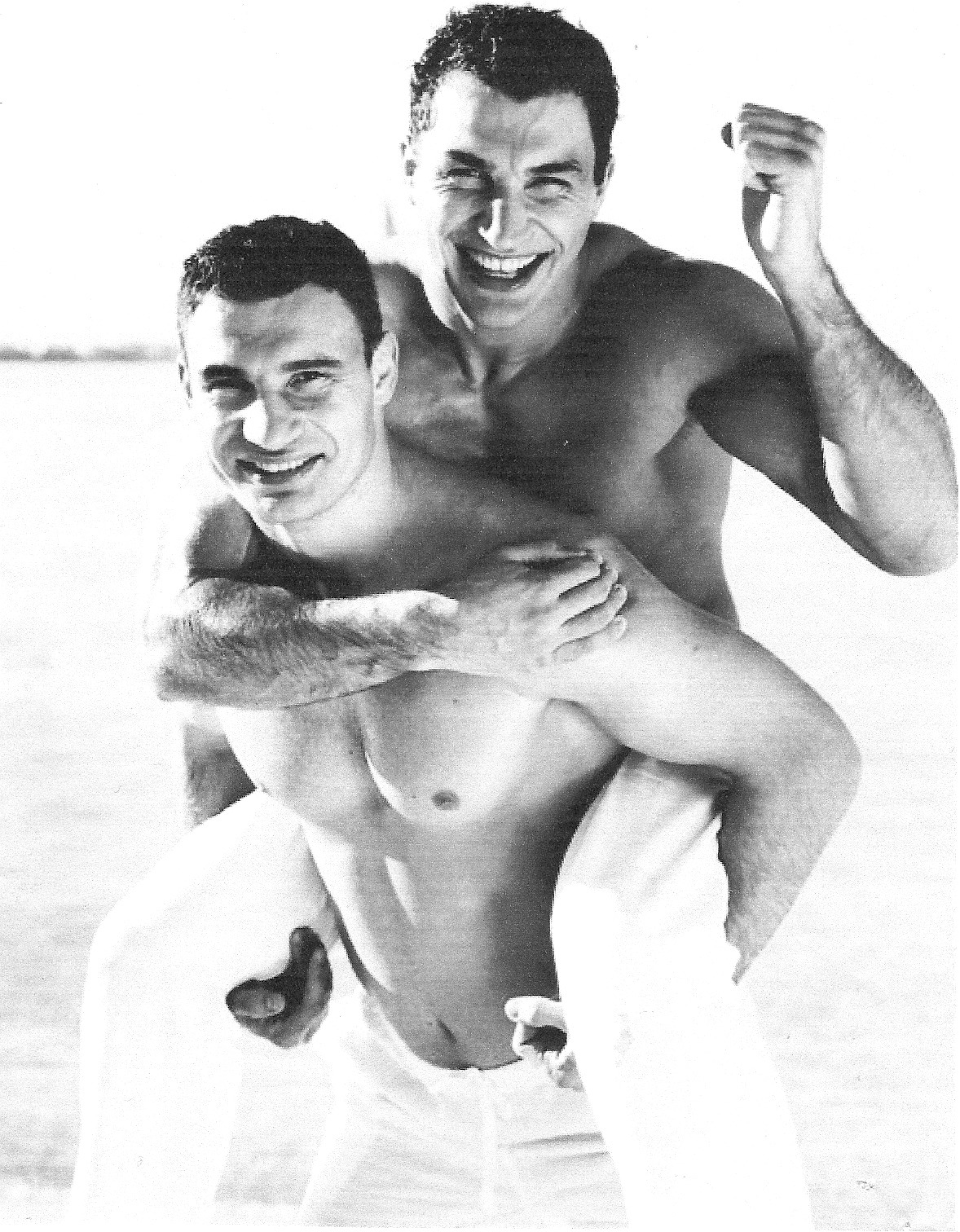
     The author starts by telling that It was a moment in the history of boxing when someone decided that it was compulsory for every fighter to have a nickname. And since that point, the sport has been plagued by awful nicknames. Well, the appeal of the Klitschko brothers' nicknames is all about Eastern Bloc schlock. The Rocky-villain factor is dialed up to 11, and with it a certain homoeroticism (exhibits AB, and C). The schlock factor is so high on these nicknames that they're hardly ever used, which is exactly why we should never forget them.


   The author gives us another different nicknames of other famous people, like: 

Ruslan 'The Siberian Rocky' Provodnikov

Erislandy 'The American Dream' Lara


In conclusion the author says that: "Amid the dross, there are some superb monikers in boxing. Here is an analysis of what makes a nickname work."
I found the article very interesting, the hole life I am engaged in different varieties of spot! But boxing for me is one of the best and important sport for me. Looking for sport news- it's very important!

-------------------------------------------------------------------------------------------------------------------------

Now I want to ask you some questions:
1. Have you ever had a nickname?
2. What is your favorite sportsmen?
3. How often do you whatch sport-channel?


The headline of the article I have read is "Translation table explaining the truth behind British politeness becomes internet hit". The article was written by Alice Philipson and was published in telegraph.co.uk website on the 2nd of September, 2013.

The main idea of the article is that the Britons use the words and expressions in the broadest sense. They don’t say what they keep in mind in fact, point-blank out of politeness. When foreigners communicating with the Britons sometimes they do not feel the brink and perceive words without subtext.


For example, when the Briton says “you must come for dinner” actually he says it out of politeness and it does not result in an invitation.


Difficulties in communication arise because of such misunderstandings.

In her article the author has placed a table which shows how for a foreigner can be difficult to understand what the Briton really wants to say.

For example, when the Briton begins a sentence “with the greatest respect ...”, he actually means “I think you are an idiot”.


This table posted on the Internet Duncan Green, a strategic adviser for Oxfam and described it as "a handy guide for our fellow Europeans and others trying to fathom weaselly Brit-speak".

The real author of this table is unconfirmed, but it is thought that this table has been drawn up by a Dutch company which wanted to help working employees in the UK.

I found this article very interesting, because I learned a lot of useful information there. As far as I am also a foreigner and I have to communicate with the British, it is very important to understand the implication of the phrase because I don’t want to be in an awkward situation.


In your opinion is it a popular problem now? How do you think how to avoid such misunderstandings? Do you have any personal examples of this misunderstanding?

Language pecularities

http://www.theguardian.com/media/mind-your-language/2014/oct/10/mind-your-language-american-english

The headline of the article I've read is "Divided by a commom language: why an American won't call you a "bloody arse ". It was written by Maraithe Thomas and peblished in the Guardian, 10 October 2014.
The main idea of the article is that though Americans and Britons have the same language, they talk in completely different ways. But still it shouldn't influence people too much, and they should be tolerable to each dialect and, probably, get something useful from both.


The author starts by retelling a dialogue with her friend, who asserted her that she had some changes in the way of speaking and said "You sound British". Further she gives us an explanation of these changes: she worked in the Guardian for three years with mostly British co-workers, and her roommate was British. She worked in New York, but it was "a plot of UK soil right in the middle of Manhattan".
The author goes on by saying that know her language is a hybrid of two languages: "about 75% American and 25% British". She says it's a real science to pick up new words from both languages, to adjust foreign speech.
The author also sais there are some British words Americans just can't say.
In conclusion it's said "It's a happy circumstance to have opportunity to learn the quirks of a different culture.
I found this article very interesting. I knew that American and British English are very different, but here I found a real experience, an outward glance.


I have some questions to readers:
1) Do you think the difference between these two languages is so much noticable?
2) What do you think about borrowing words from similar languages?
3) What do you think about the author's reaction to her friend's words "You sound British"? Was it really so offencive?

Healthcare

http://www.theguardian.com/lifeandstyle/2014/nov/14/lasting-effect-of-foetal-alcohol-damage
The title of the article is "Lasting effect of foetal alcohol damage"
The article was published in The Guardian by the 14th of 

November 2014

It describes the problems of the children whose mothers drank.Then the children  have the disease“foetal alcohol syndrome”-a high level of permanent brain damage. This disease is one of the largest undetected causes of mental health problems and behavioral problems.The author believes that it is necessary to support children who were born in such a situation because these children cannot attend mainstream schools.The author tells about her own  experience of helping them.

 In conclusion she says that the parents struggle alone, turned away by child and adolescent mental health services and with local authorities telling them there is no funding to support them beyond a few kind words and a couple of “parenting” courses.
The facts of the article are terrifying.I agree with the author and think that this situation is one of the most important problems in the healthcare of children.The government should promote a healthy lifestyle of parents and allocate funds(money) for the treatment of children with problems.
 
Question:
1) What kind of  disease do the children (whose parents drank alcohol )have?
2)Who can help with solving this problem?
3) What do you think about this situation?


Healthcare


http://www.theguardian.com/lifeandstyle/2014/nov/23/finnish-teenagers-sleeping-disorders-double-20-years-energy-drinks-ipads-smartphones


The headline of the article I have read is : " Finnish teenagers with sleeping disorders double in last 20 years".The article was written by Helen Russell. It was published in the newspaper "The Guardian" on November, 23. The main idea of the article is to show how Energy Drinks and Smatphones may be harmful.
The article is telling us about Finnish teenages that suffer fron chronic fatigue. The author starts by telling the reader that researchers studied more than a million teenagers between the ages of 13-17 and found levels of insomnia at a record high and results show that around 20% of teenage girls and 10% of teenage boys in Finland now have sleeping disorders.
Also studies suggest that prolonged sleeplessness can lead to depression, diabetes, obesity and cardiovascular diseases in later life. The author gaves as an example words of Kronholm, who has been studying sleep patterns for 30 years. He suspects that energy drinks have an undeniable impact on this problem. He pointes to “the ‘screen time’ hypothesis”. Studies show that exposure to bright light from the screens of iPads, tablets, computers and mobile phones can halt the natural production of melatonin and prevent sleep.

The author is confident that parents must educate their children in “sleep hygiene” and the importance of taking a break from electronic devices before bedtime.
The author cames to the conclusion with Kronholm`s words: “There’s a possibility that school may start a little later each day to allow children to sleep more in the mornings, but ultimately these decisions will be down to the politicians.”

I found this article very interesting and important not only for Finnish children, but for Russian ones too. Nowadays every school child has a smartphone and he use it everywhere. But not everyone knows how much harm it can give to him.
_____________________________________________

Now I would like to ask you some questions:
1. Have you got a smartphone and how often do you use it?
2. Have you ever drank energy drink? What do you think about it?
3. How do you think: who or what is guilty in this chronic fatigue?