понедельник, 1 декабря 2014 г.

 Sport


http://www.theguardian.com/sport/queensberry-rules-boxing-blog/2014/may/28/best-nicknames-boxing-wladimir-vitali-klitschko

   The headline of the article I've read is: "Who has the best nickname in boxing?". The article was written by Alex McClintock. It was published in the on-line newspaper "The Guardian"  on May, 28.  The main idea of the article is about the varieties and the meaning of  a nickname in boxing.
    The article is telling us about nicknames, which are something your manager thinks of before your first fight! 
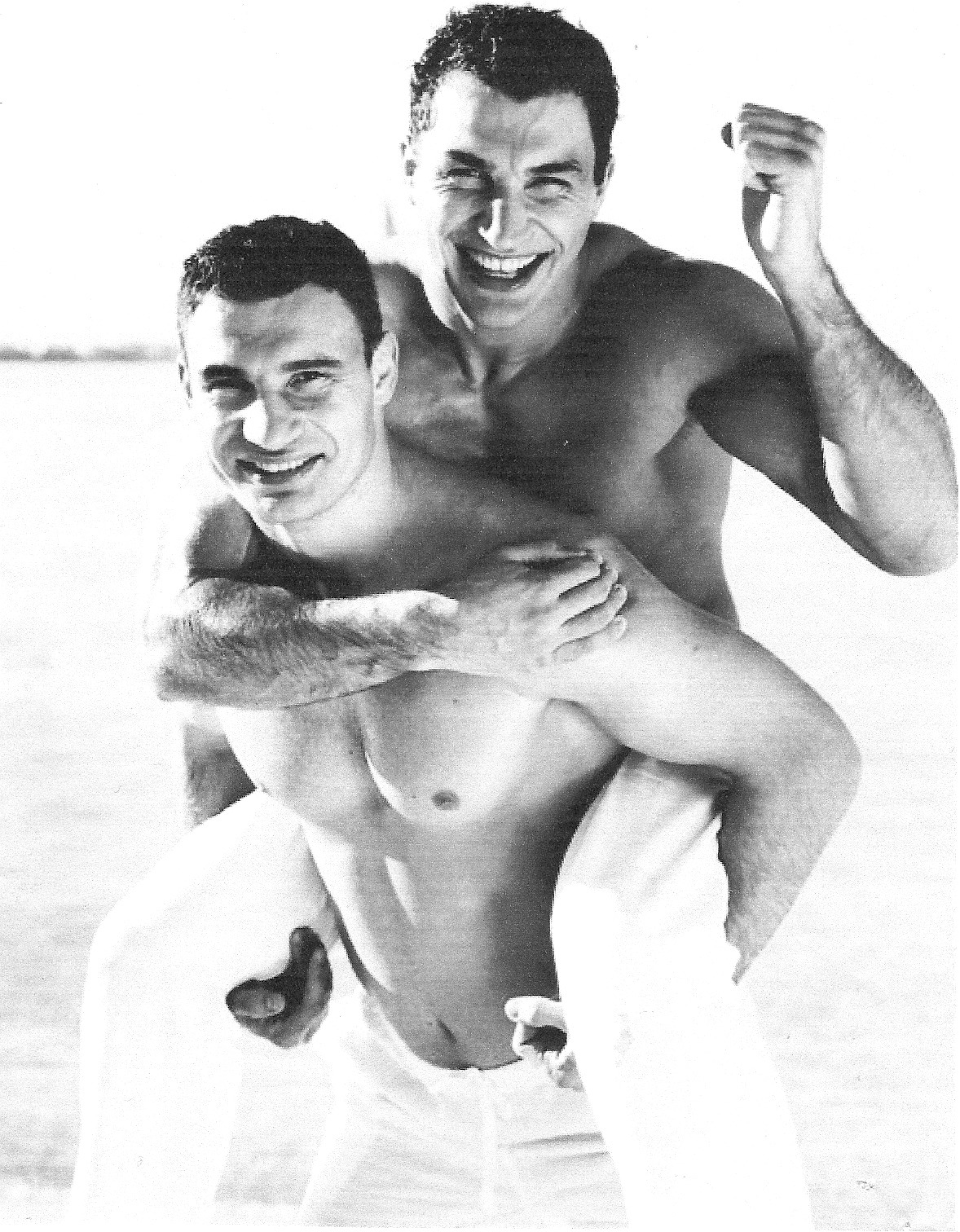
     The author starts by telling that It was a moment in the history of boxing when someone decided that it was compulsory for every fighter to have a nickname. And since that point, the sport has been plagued by awful nicknames. Well, the appeal of the Klitschko brothers' nicknames is all about Eastern Bloc schlock. The Rocky-villain factor is dialed up to 11, and with it a certain homoeroticism (exhibits AB, and C). The schlock factor is so high on these nicknames that they're hardly ever used, which is exactly why we should never forget them.


   The author gives us another different nicknames of other famous people, like: 

Ruslan 'The Siberian Rocky' Provodnikov

Erislandy 'The American Dream' Lara


In conclusion the author says that: "Amid the dross, there are some superb monikers in boxing. Here is an analysis of what makes a nickname work."
I found the article very interesting, the hole life I am engaged in different varieties of spot! But boxing for me is one of the best and important sport for me. Looking for sport news- it's very important!

-------------------------------------------------------------------------------------------------------------------------

Now I want to ask you some questions:
1. Have you ever had a nickname?
2. What is your favorite sportsmen?
3. How often do you whatch sport-channel?


The headline of the article I have read is "Translation table explaining the truth behind British politeness becomes internet hit". The article was written by Alice Philipson and was published in telegraph.co.uk website on the 2nd of September, 2013.

The main idea of the article is that the Britons use the words and expressions in the broadest sense. They don’t say what they keep in mind in fact, point-blank out of politeness. When foreigners communicating with the Britons sometimes they do not feel the brink and perceive words without subtext.


For example, when the Briton says “you must come for dinner” actually he says it out of politeness and it does not result in an invitation.


Difficulties in communication arise because of such misunderstandings.

In her article the author has placed a table which shows how for a foreigner can be difficult to understand what the Briton really wants to say.

For example, when the Briton begins a sentence “with the greatest respect ...”, he actually means “I think you are an idiot”.


This table posted on the Internet Duncan Green, a strategic adviser for Oxfam and described it as "a handy guide for our fellow Europeans and others trying to fathom weaselly Brit-speak".

The real author of this table is unconfirmed, but it is thought that this table has been drawn up by a Dutch company which wanted to help working employees in the UK.

I found this article very interesting, because I learned a lot of useful information there. As far as I am also a foreigner and I have to communicate with the British, it is very important to understand the implication of the phrase because I don’t want to be in an awkward situation.


In your opinion is it a popular problem now? How do you think how to avoid such misunderstandings? Do you have any personal examples of this misunderstanding?

Language pecularities

http://www.theguardian.com/media/mind-your-language/2014/oct/10/mind-your-language-american-english

The headline of the article I've read is "Divided by a commom language: why an American won't call you a "bloody arse ". It was written by Maraithe Thomas and peblished in the Guardian, 10 October 2014.
The main idea of the article is that though Americans and Britons have the same language, they talk in completely different ways. But still it shouldn't influence people too much, and they should be tolerable to each dialect and, probably, get something useful from both.


The author starts by retelling a dialogue with her friend, who asserted her that she had some changes in the way of speaking and said "You sound British". Further she gives us an explanation of these changes: she worked in the Guardian for three years with mostly British co-workers, and her roommate was British. She worked in New York, but it was "a plot of UK soil right in the middle of Manhattan".
The author goes on by saying that know her language is a hybrid of two languages: "about 75% American and 25% British". She says it's a real science to pick up new words from both languages, to adjust foreign speech.
The author also sais there are some British words Americans just can't say.
In conclusion it's said "It's a happy circumstance to have opportunity to learn the quirks of a different culture.
I found this article very interesting. I knew that American and British English are very different, but here I found a real experience, an outward glance.


I have some questions to readers:
1) Do you think the difference between these two languages is so much noticable?
2) What do you think about borrowing words from similar languages?
3) What do you think about the author's reaction to her friend's words "You sound British"? Was it really so offencive?

Healthcare

http://www.theguardian.com/lifeandstyle/2014/nov/14/lasting-effect-of-foetal-alcohol-damage
The title of the article is "Lasting effect of foetal alcohol damage"
The article was published in The Guardian by the 14th of 

November 2014

It describes the problems of the children whose mothers drank.Then the children  have the disease“foetal alcohol syndrome”-a high level of permanent brain damage. This disease is one of the largest undetected causes of mental health problems and behavioral problems.The author believes that it is necessary to support children who were born in such a situation because these children cannot attend mainstream schools.The author tells about her own  experience of helping them.

 In conclusion she says that the parents struggle alone, turned away by child and adolescent mental health services and with local authorities telling them there is no funding to support them beyond a few kind words and a couple of “parenting” courses.
The facts of the article are terrifying.I agree with the author and think that this situation is one of the most important problems in the healthcare of children.The government should promote a healthy lifestyle of parents and allocate funds(money) for the treatment of children with problems.
 
Question:
1) What kind of  disease do the children (whose parents drank alcohol )have?
2)Who can help with solving this problem?
3) What do you think about this situation?


Healthcare


http://www.theguardian.com/lifeandstyle/2014/nov/23/finnish-teenagers-sleeping-disorders-double-20-years-energy-drinks-ipads-smartphones


The headline of the article I have read is : " Finnish teenagers with sleeping disorders double in last 20 years".The article was written by Helen Russell. It was published in the newspaper "The Guardian" on November, 23. The main idea of the article is to show how Energy Drinks and Smatphones may be harmful.
The article is telling us about Finnish teenages that suffer fron chronic fatigue. The author starts by telling the reader that researchers studied more than a million teenagers between the ages of 13-17 and found levels of insomnia at a record high and results show that around 20% of teenage girls and 10% of teenage boys in Finland now have sleeping disorders.
Also studies suggest that prolonged sleeplessness can lead to depression, diabetes, obesity and cardiovascular diseases in later life. The author gaves as an example words of Kronholm, who has been studying sleep patterns for 30 years. He suspects that energy drinks have an undeniable impact on this problem. He pointes to “the ‘screen time’ hypothesis”. Studies show that exposure to bright light from the screens of iPads, tablets, computers and mobile phones can halt the natural production of melatonin and prevent sleep.

The author is confident that parents must educate their children in “sleep hygiene” and the importance of taking a break from electronic devices before bedtime.
The author cames to the conclusion with Kronholm`s words: “There’s a possibility that school may start a little later each day to allow children to sleep more in the mornings, but ultimately these decisions will be down to the politicians.”

I found this article very interesting and important not only for Finnish children, but for Russian ones too. Nowadays every school child has a smartphone and he use it everywhere. But not everyone knows how much harm it can give to him.
_____________________________________________

Now I would like to ask you some questions:
1. Have you got a smartphone and how often do you use it?
2. Have you ever drank energy drink? What do you think about it?
3. How do you think: who or what is guilty in this chronic fatigue?

воскресенье, 30 ноября 2014 г.

Art


http://www.theguardian.com/artanddesign/2014/nov/25/conflict-time-photography-tate-modern-the-scars-of-war-sean-o-hagan

    The article I've read is titled "The scars of war: how good is photography at capturing conflict?".
The article was written by Sean O'Hagan and it was published in the newspaper "The Guardian" on the 25th of November, 2014.
The main idea of the article is showing the ominous beauty of the pictures revealing the unspeakable horrors of war.  "Seeing is believing", "words are but wind, but seeing is believing", "a picture is worth a thousand words", "one eyewitness is better than two hear-so's",  - the well-known bywords say. Is it so? I presume yes. 
Authors describes the objects of the "Conflict, Time, Photography", a new show at London’s Tate Modern. 
  Sean O'Hagan begins with telling us several words about Kurt Vonnegut and his absurdist anti-war novel. ‘People aren’t supposed to look back,” - Vonnegut says. 
 "It is Vonnegut’s novel, rather than an image, that is the starting point for "Conflict, Time, Photography". A notice next to the exhibition entrance describes how the book came to be written (Vonnegut was an American POW who witnessed the firebombing of Dresden on 13 February 1945) and how the structure of the show echoes Vonnegut’s use of narrative time shifts to move freely through the history of photography and conflict. It is left to the viewer to decide whether photography can look back any more successfully than fiction at events that often, as Vonnegut concluded, defy description or rational understanding".
    The author narrates the detailes of almost  all the pictures of the gallery.
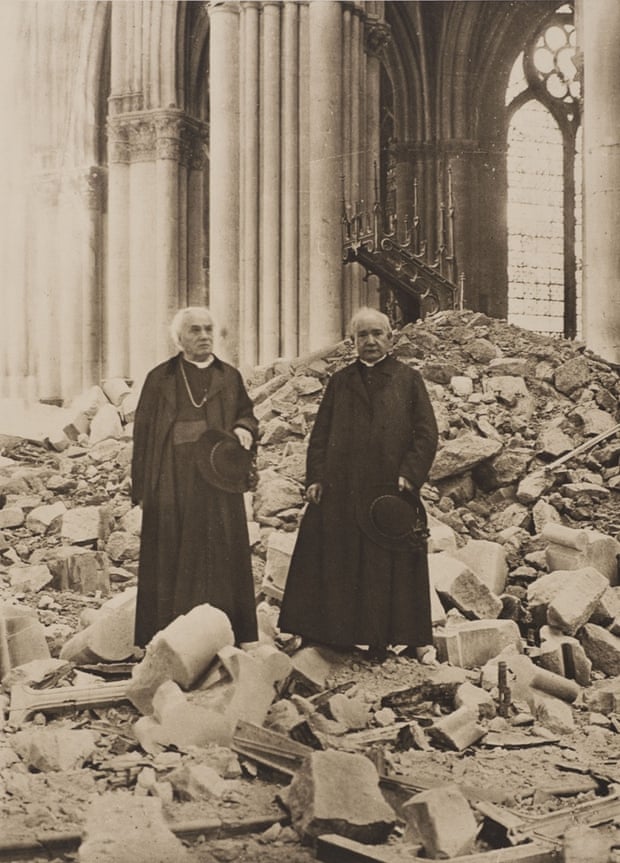
The picture that influenced me the most is "Pierre Antony-Thoure from Reims after the war. The 
mutilated cathedral. The devastated city". Looking at that picture I feel that strange kind of feeling... Maybe I feel a bit frustrated or even desperated. This mismatch, no, this discrepancy between father-confessors ,personifying  lowliness of mind, reverence and awe of God ,and the amplitudinous destruction, having been done by the power of war violence makes me button up and begin thinking. 
Where God was when it everything was happening? Does he really exist  and if yes, why didn't He stop such a cruelty? 
When I was younger I asked these questions very often. But today I know the answer. He created us not just to stick to the rules and to follow without thinking. He wants to rely on us and to let us understand everything with the help of our minds.


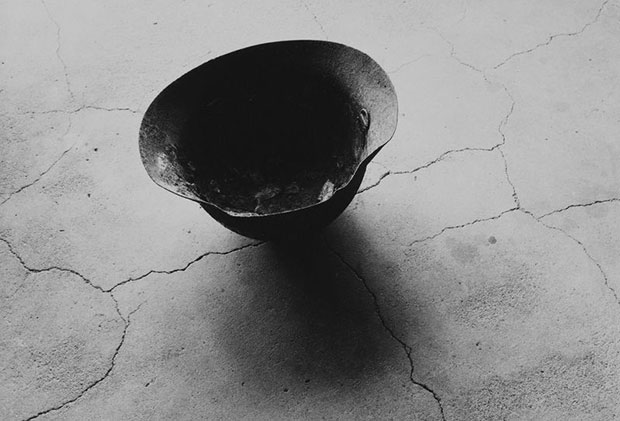
Also I liked another picture. It is so simple but at the same time it tells a lot.

Shomei Tomatsu, Steel Helmet with Skull Bone Fused by Atomic Bomb, Nagasaki 1963. Courtesy Taka Ishii Gallery, Tokyo Photograph: Courtesy of Taka Ishii Gallery, Tokyo

The author of the article says: "The first thing to make clear about Time, Conflict, Photography is what it doesn’t show. There is no photojournalism and little reportage, no scenes of carnage or heroism. Anyone expecting an exhibition of traditional war photography will be disappointed. The Tate’s curator of photography, Simon Baker, describes it, instead, as “a conceptual reading of how war is remembered”".
I think it is so valuable not to show the global picture but to pay attention to the little details of ordinary people's life and pain.


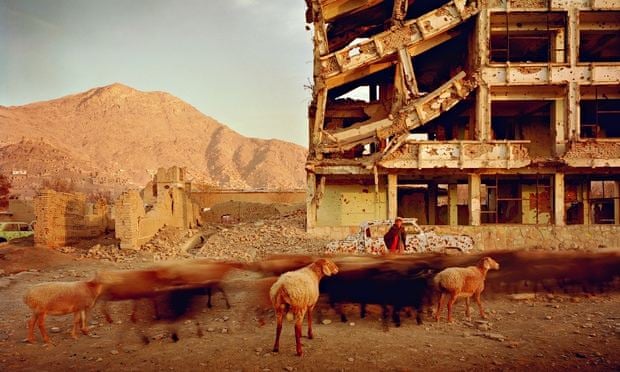
Aftermath … a bullet-scarred apartment block in Kabul (detail) by Simon Norfolk. Photograph: Simon Norfolk


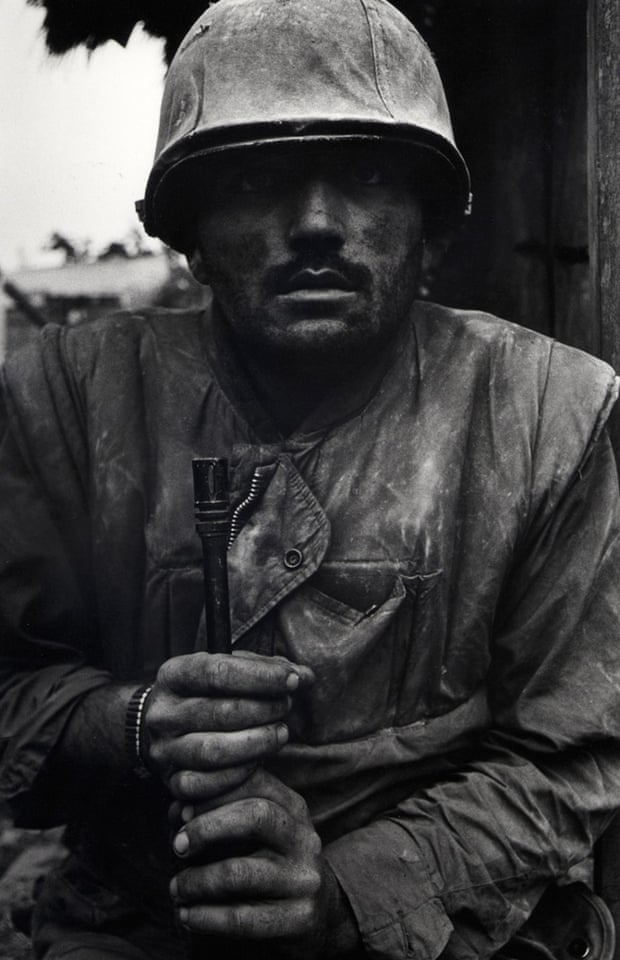
Don McCullin’s Shell-Shocked US Marine, Vietnam, Hue, 1968


US Bombing on Taliban Positions, 2001, Luc Delahaye. Courtesy Luc Delahaye and Galerie Nathalie


Toshio Fukada, The Mushroom Cloud - Less Than Twenty Minutes After the Explosion. Photograph courtesy Tokyo Metropolitan Museum of PhotographyPhotograph: okyo Metropolitan Museum of Photography

So I got 3 questions for you, my dear readers:

1)  what picture of the gallery did you like the most and why;
2)  can the picture really make the great impression and influence the spectator's mind;
3)  can be war sometimes interpreted as a needed action because there's no development without revolutions.


суббота, 29 ноября 2014 г.

Social Behaviour


The headline of the article I`ve read is "I was 23 and a Vogue editor when I fostered an orphan girl". The article was written by Lisa Lovatt-Smith and it was published in the newspaper ''The Guardian", 23 November 2014.
The main idea of the article it to show people that there is nothing strange or immoral in brining up orphan children. They are usual kids and they also deserve happiness. So if you have an opportunity to help someone, why not? We shouldn`t forget that there are much more important things in our lives than money and even career. We are people, we have feelings... "It was good to be as kind as possible."sais the author.
The author starts by telling a very exciting, touching and detailed story of her life. Lisa Lovatt-Smith was a successful Paris editor of the Spanish Vogue group of magazines, she had a boyfriend, wonderful career a prodigious wardrobe. She lived in a luxurious house in Paris. One day she met a five-year old girl who was living in the social housing block. The girl had skinny legs, a dirty face and tangled hair. She was called Sabrina. Lisa noticed her waiting for a taxi, she asked Sabrina if she wanted to eat and the girl agreed. Then they started talking and spending afternoons every day.
The author writes how difficult it was to understand what to do and what decision would be right. She liked the girl and got attached to her. Under the circumstances Luis had to make a choice: to leave the girl with the social workers or to become her official foster mother. "Flowers sent by Karl Lagerfeld, front-row seats at fashion shows, highbrow conversation about the newest trends – I loved it all. Becoming the guardian of a little girl wasn’t part of the plan."
However, Luis understood there was a bond between them and she really liked Sabrina. Besides, she knew the girl`s family. Her mother died and father was an alcoholic. " I knew I could not abandon Sabrina."
The author comes to the conclusion that one day when you need to make a decision or a choice, listen to your heart and think about the most important things in your life. Luis had to change her life completely. She split up with her boyfriend, refused travelling because of her work, argued with friends and even her own mother, who approved that it would turn to be impossible for Luis to get married, the main reason was the orphan girl. Society and her close persons didn't`t favour it at all. Nevertheless, she brought up Sabrina and arranged her life. Luis has never been sorry about her choice. They are absolutely happy together.
I found this article very touching and encouraging. I think it`s a good example for us. The author explains that there shouldn`t be any hesitation or jaundices to the orphan children. That`s not a good side of society. We are all people. I`m absolutely agree with the author. I expect some people change their opinion after reading this wonderful article. 

 
Now I`d like to ask you some questions:
1) What do you think about the society`s disapproval of Luis`s behaviour?
2) What can change the opinion of the society?
3) Could you act like Luis in the same situation?

Social behaviour

http://www.theguardian.com/uk-news/2014/nov/28/birmingham-mother-left-kids-see-man-australia-suspended-sentence

The headline of the acricle is "UK mother who left children to see man in Australia gets suspended sentence". The author of this article is Andrew Johnson and it was published in "The Guardian", 28 November. The main idea is that mother of six children flew to Austalia to see a man she met online after telling her children that she was going to Asda (local supermarket), has been given a suspended sentence. The article is telling us about the Birmingham woman who left her 14-year-old son in charge for six weeks. It was lucky that he phoned his grandparents hours after and they alerted authorities.

Holiday Programs - Cleveland OrchestraAuthor points out the fact that mother, now expecting a seventh child, ignored all messages and deactivated her social media accounts. Andrew Johnson says that she was sentenced to six months in jail, suspended for two years. Judge Murray Creed said it was wilful abandonment  but accepted that her children, the youngest of which was three at the time, had been brought up in a “satisfactory and supportive way”. The author cames to the conclusion with words of defence solicitor John Smitheman: "She had been in an abusive relationship and the children, now living with their grandparents, had not been affected by the experience".
I found this article true to life, it's a good example of how you should not take care of your children.

And now I want to ask you some questions:
1. Do you think that she should go to jail for what she had done?
2. Do you think that she should be deprived of the parental rights?
3. Do you know anyone who left children home alone for a very long time?

FOREIGN POLICY


The headline of the article I've read is "Royal Navy chases four Russian ships from the North Sea out into English Channel." The article is written by Chris Hughes and it was published in Mirror,28 November. The main idea of this article is that Russia warships appeared in the territorial waters of Britain and the British fleet had to escort them.
The Royal Navy was alerted to shepherd four Russian warships through the Straits of Dover.
HMS Tyne escorted the vessels out of UK waters as they sailed from the North Sea into the English Channel.The Russian manoeuvres follow months of tension over Moscow’s takeover of Crimea and its support for armed separatists in Ukraine.Russia said the fleet carried out military exercises being anchored in international waters in Normandy.

"Russia’s Northern Fleet HQ said: “While anchored the crew will perform a series of exercises on combating infiltrating submarine forces.”"
 But a NATO spokesman expressed doubts about the “exercises” and suggests that the Russian ships tried to escape from the bad weather.
"He added: “The ships are not exercising in the Channel as some Russian headlines would have us believe.
“Our information indicates they are transiting and have been delayed by weather conditions.”"
The Royal Navy insisted that it isn’t unusual for Russia to send warships through the Channel.
"A Defence Ministry spokesman said: “We are aware four Russian naval ships have passed through the Dover Strait, which all ships have the right to do under international law.”"
With East-West tension in the past two years The Royal Air Force had intercepted dozens of Russian warplanes in the airspace over Britain.


In my opinion, in the field of recent events, it was necessary to expect such a reaction from Europe to the Russian warships. And again in this situation mentioned Ukraine and the help to "separatists". It seems to me, no matter how Russia doesn't try to prove their innocence to the events in Ukraine it will not lag behind. The good news is that NATO spokesman has found another explanation.

1) What do think about this situation?
2) How do you think when the world stops to bind Russia to the events in Ukraine?
3) How do you think did the USA influence on France?

пятница, 28 ноября 2014 г.

ART


The headline of the article I've read is 'Mikhailovsky Ballet - the St Petersburg company wows Manhattan'. The article is written by Luke Jennings and it was published in The Gardian, 23 November. The main idea of the article is that The Mikhalovsky Ballet of St Petersburg  makes its US debut enchanting the audiens by refined technique and insouciant star turns.


The author starts by telling the reader that the company was relaunched in 2007 by a colourful figure, Vladimir Kekhelman, and since then he has steered the Milhailovsky Ballet with a steady hand.

Luke Jennings points out that the company is well regarded at home, in London and New Yorl now with the help of the ballet master Mikhail Messerer, building a unique repertoire, and such star dancers as Natalia Osipova and Ivan Vasiliev.

Natalia Osipova in the role of Gisele
The article goes on to say that the three week tour opened on 11 November with  the mission to resurrect lost or neglected ballets of the 19th century and the communist era and let the audience take pleasure of the dancers' impossible speed, elegant circuit of flying turns and impeccablу musical performances, in general.

The author comes to the conclusion that Russian ballet is no longer just about the Bolshoi and the Mriinsky. 

I found the article quite interesting and useful to know that Russian ballet has a strong appeal to today's audience. It is a goos example how art can create a powerful impression. This success story proves that even in difficult times for classical dance, Russian ballet remains popular and is internationally recognised now due to our talanted creative people.

Source
http://www.theguardian.com/stage/2014/nov/23/mikhailovsky-ballet-new-york-review-lincoln-center-american-debut


My question: 'Why did this Ballet become so famous and well-recognizable even abroad? What in ypur opinion makes it unique? '