http://www.theguardian.com/artanddesign/2014/nov/25/conflict-time-photography-tate-modern-the-scars-of-war-sean-o-hagan
The article I've read is titled "The scars of war: how good is photography at capturing conflict?".
The article was written by Sean O'Hagan and it was published in the newspaper "The Guardian" on the 25th of November, 2014.
The main idea of the article is showing the ominous beauty of the pictures revealing the unspeakable horrors of war. "Seeing is believing", "words are but wind, but seeing is believing", "a picture is worth a thousand words", "one eyewitness is better than two hear-so's", - the well-known bywords say. Is it so? I presume yes.
Authors describes the objects of the "Conflict, Time, Photography", a new show at London’s Tate Modern.
Sean O'Hagan begins with telling us several words about Kurt Vonnegut and his absurdist anti-war novel. ‘People aren’t supposed to look back,” - Vonnegut says.
"It is Vonnegut’s novel, rather than an image, that is the starting point for "Conflict, Time, Photography". A notice next to the exhibition entrance describes how the book came to be written (Vonnegut was an American POW who witnessed the firebombing of Dresden on 13 February 1945) and how the structure of the show echoes Vonnegut’s use of narrative time shifts to move freely through the history of photography and conflict. It is left to the viewer to decide whether photography can look back any more successfully than fiction at events that often, as Vonnegut concluded, defy description or rational understanding".
The author narrates the detailes of almost all the pictures of the gallery.
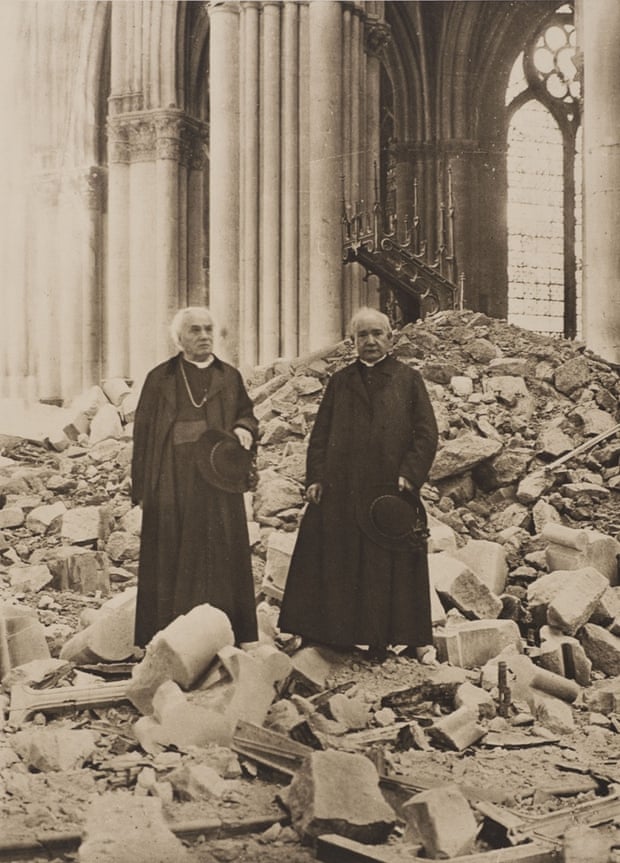
The picture that influenced me the most is "Pierre Antony-Thoure from Reims after the war. The
mutilated cathedral. The devastated city". Looking at that picture I feel that strange kind of feeling... Maybe I feel a bit frustrated or even desperated. This mismatch, no, this discrepancy between father-confessors ,personifying lowliness of mind, reverence and awe of God ,and the amplitudinous destruction, having been done by the power of war violence makes me button up and begin thinking.
Where God was when it everything was happening? Does he really exist and if yes, why didn't He stop such a cruelty?
When I was younger I asked these questions very often. But today I know the answer. He created us not just to stick to the rules and to follow without thinking. He wants to rely on us and to let us understand everything with the help of our minds.
Also I liked another picture. It is so simple but at the same time it tells a lot.
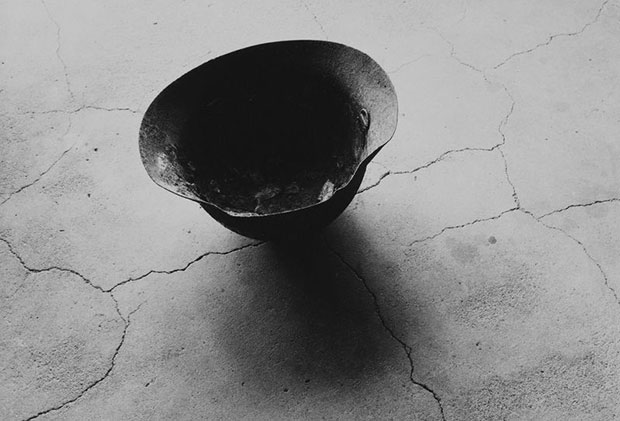
Shomei Tomatsu, Steel Helmet with Skull Bone Fused by Atomic Bomb, Nagasaki 1963. Courtesy Taka Ishii Gallery, Tokyo Photograph: Courtesy of Taka Ishii Gallery, Tokyo
The author of the article says: "The first thing to make clear about Time, Conflict, Photography is what it doesn’t show. There is no photojournalism and little reportage, no scenes of carnage or heroism. Anyone expecting an exhibition of traditional war photography will be disappointed. The Tate’s curator of photography, Simon Baker, describes it, instead, as “a conceptual reading of how war is remembered”".
I think it is so valuable not to show the global picture but to pay attention to the little details of ordinary people's life and pain.
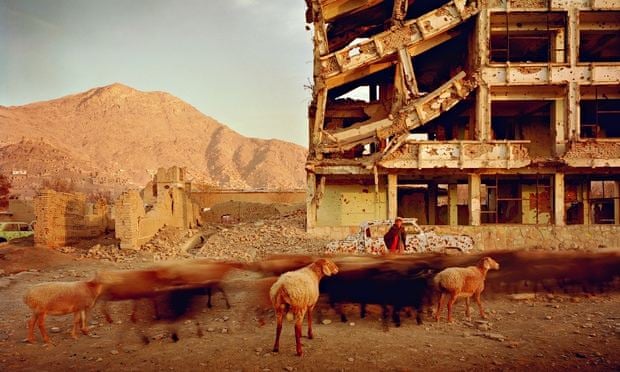
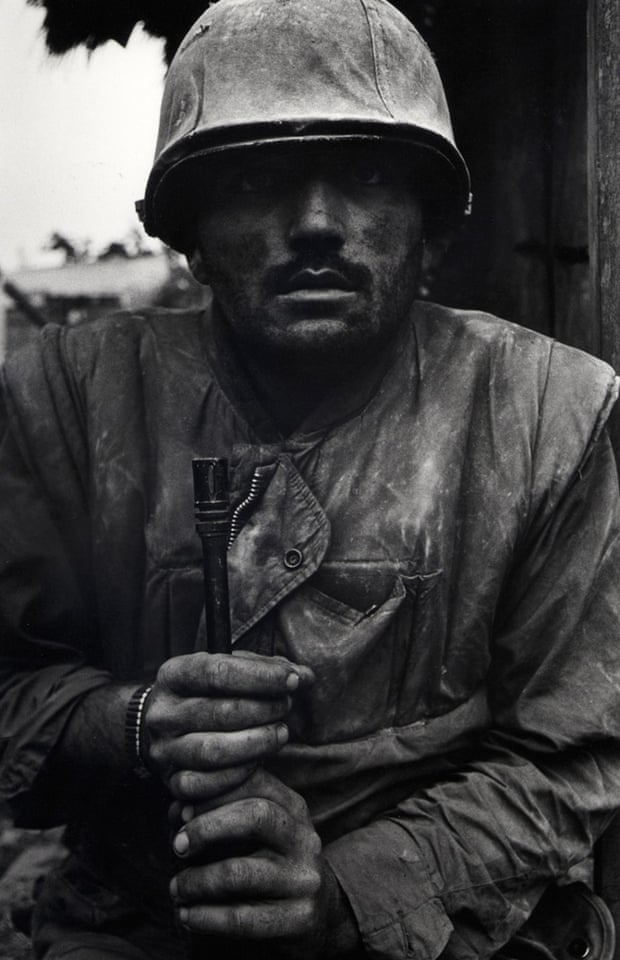

US Bombing on Taliban Positions, 2001, Luc Delahaye. Courtesy Luc Delahaye and Galerie Nathalie

So I got 3 questions for you, my dear readers:
1) what picture of the gallery did you like the most and why;
2) can the picture really make the great impression and influence the spectator's mind;
3) can be war sometimes interpreted as a needed action because there's no development without revolutions.

It's very good, interesting and absorbing blog!
ОтветитьУдалить1.The most of all I like the picture is "The Constancy of time" by Salvador Dali.
This picture sets me thinking on importance of time and on that when it passes quickly and when hangs heavy though it isn't necessary at all!
2. It seems to me really yes
Looking at a picture people start reflecting on sense and on what is it on a picture and why?